The CONTAX Carl Zeiss Planar T* 50mm f/1.4 is the standard fast lens for the Contax/Yashica (C/Y) mount. This one is marked “Lens made in Japan” on the barrel. It came to me with balsam separation, and I worked on it in November 2024. This post walks through the disassembly and repair, step by step.
Some lens elements are made of two pieces of glass glued together with a clear optical cement, often called balsam. With age the cement can start to let go, and you may see haze or frosty patterns inside the glass. Cleaning the outside surfaces will not help, because the problem is between the two glasses.
1. Looking into the lens
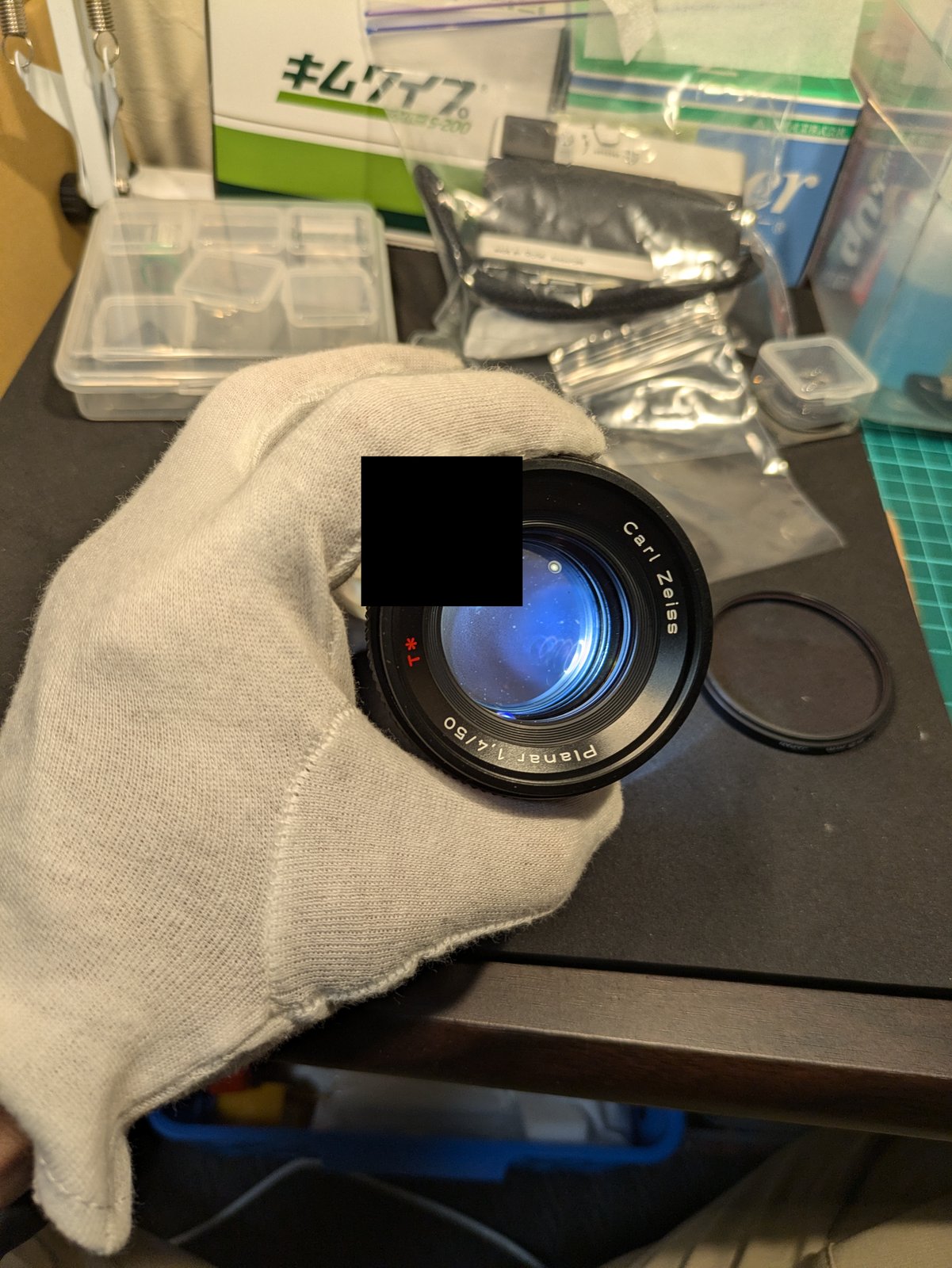
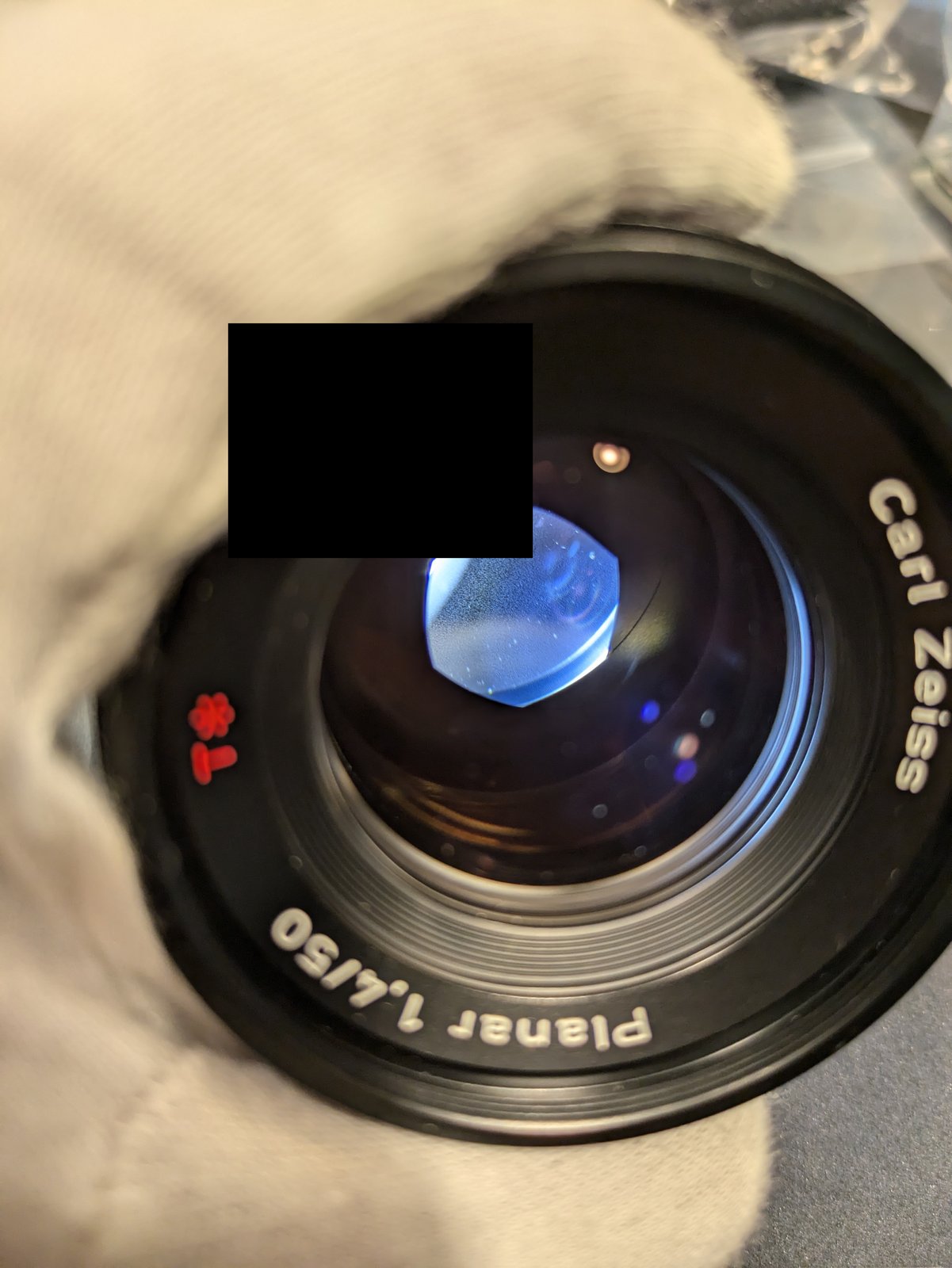
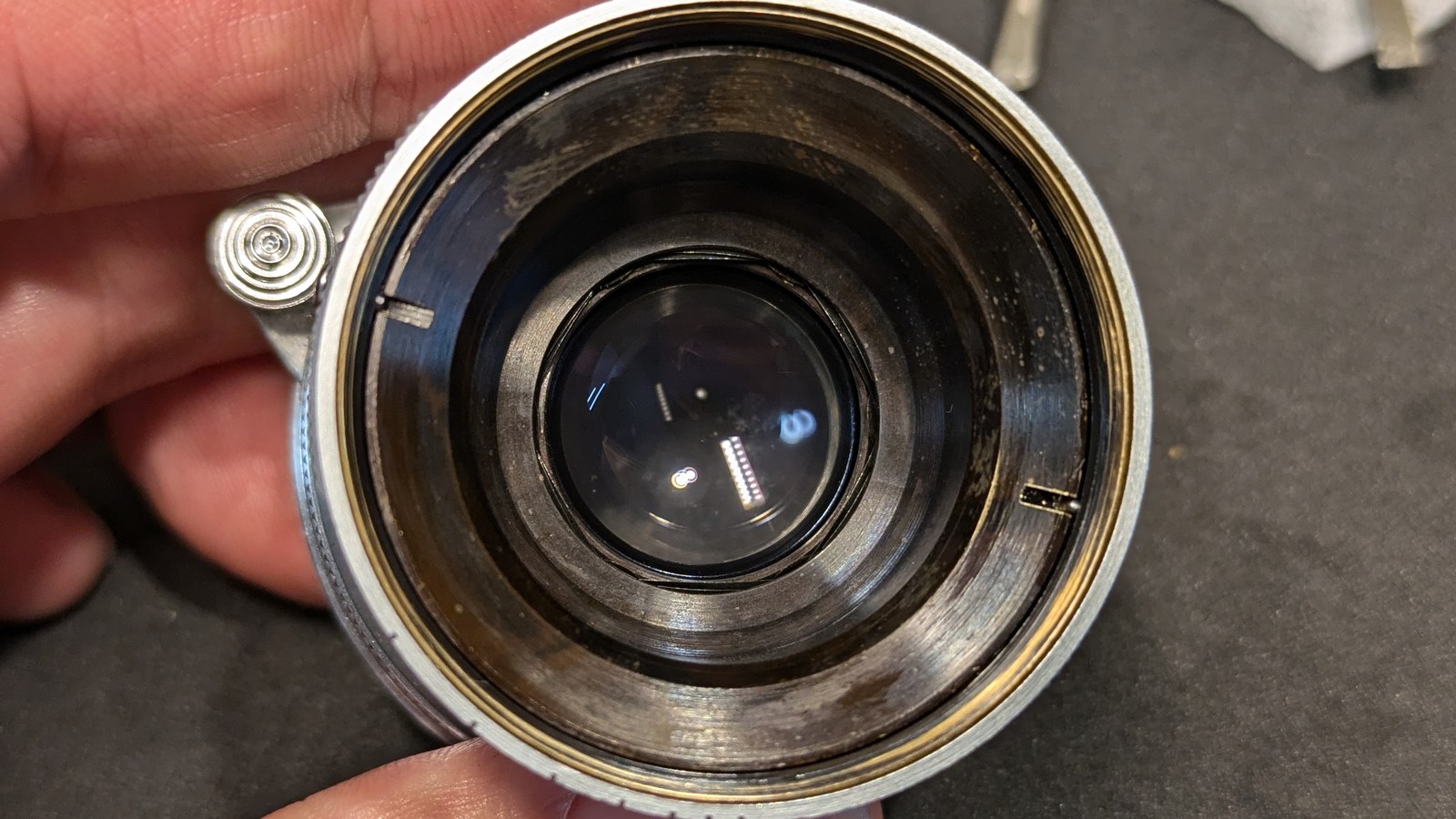
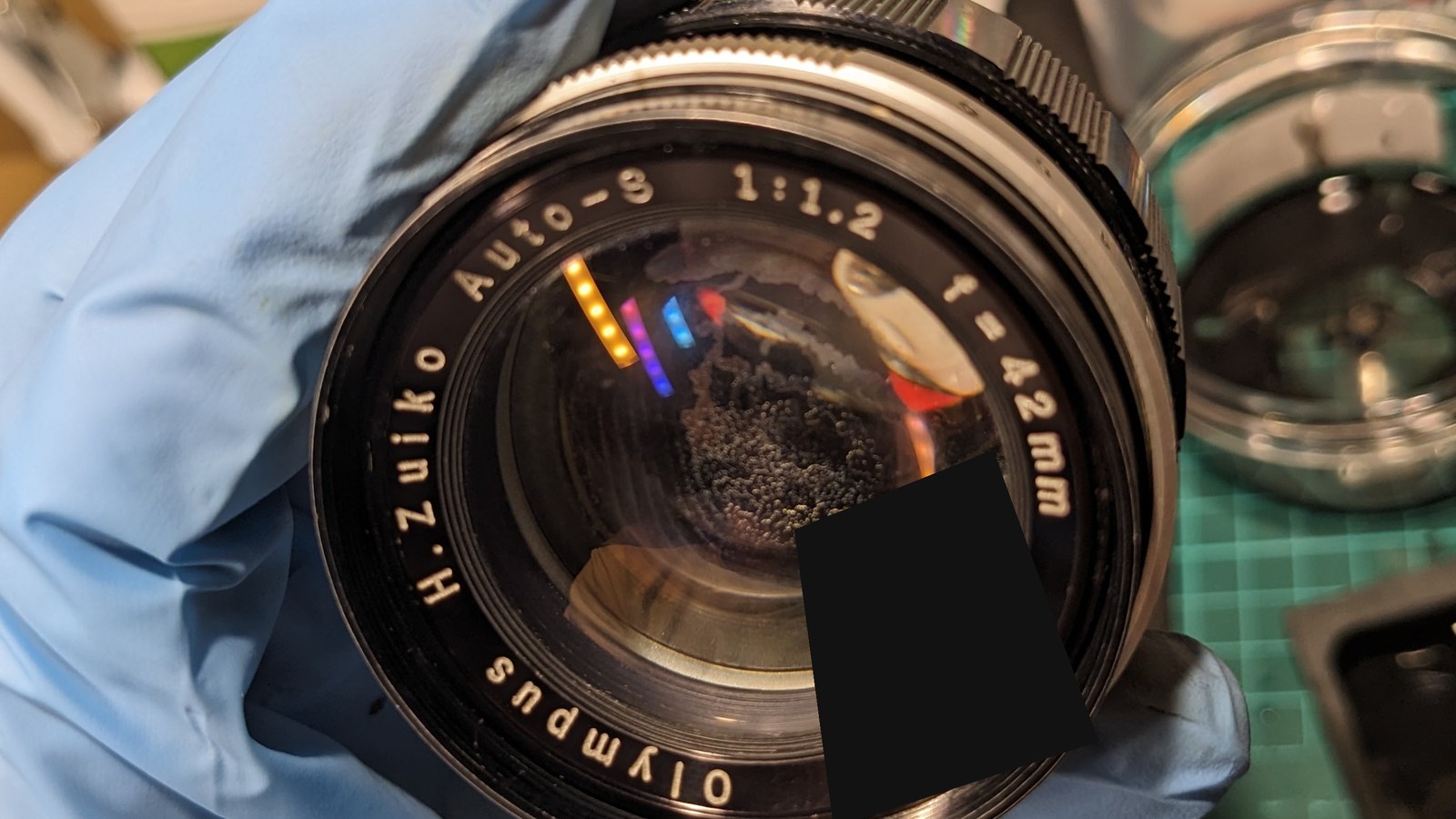
With a light behind it, a fine, speckled haze can be seen inside the lens, both from the front and from the mount side.
2. Taking out the rear group
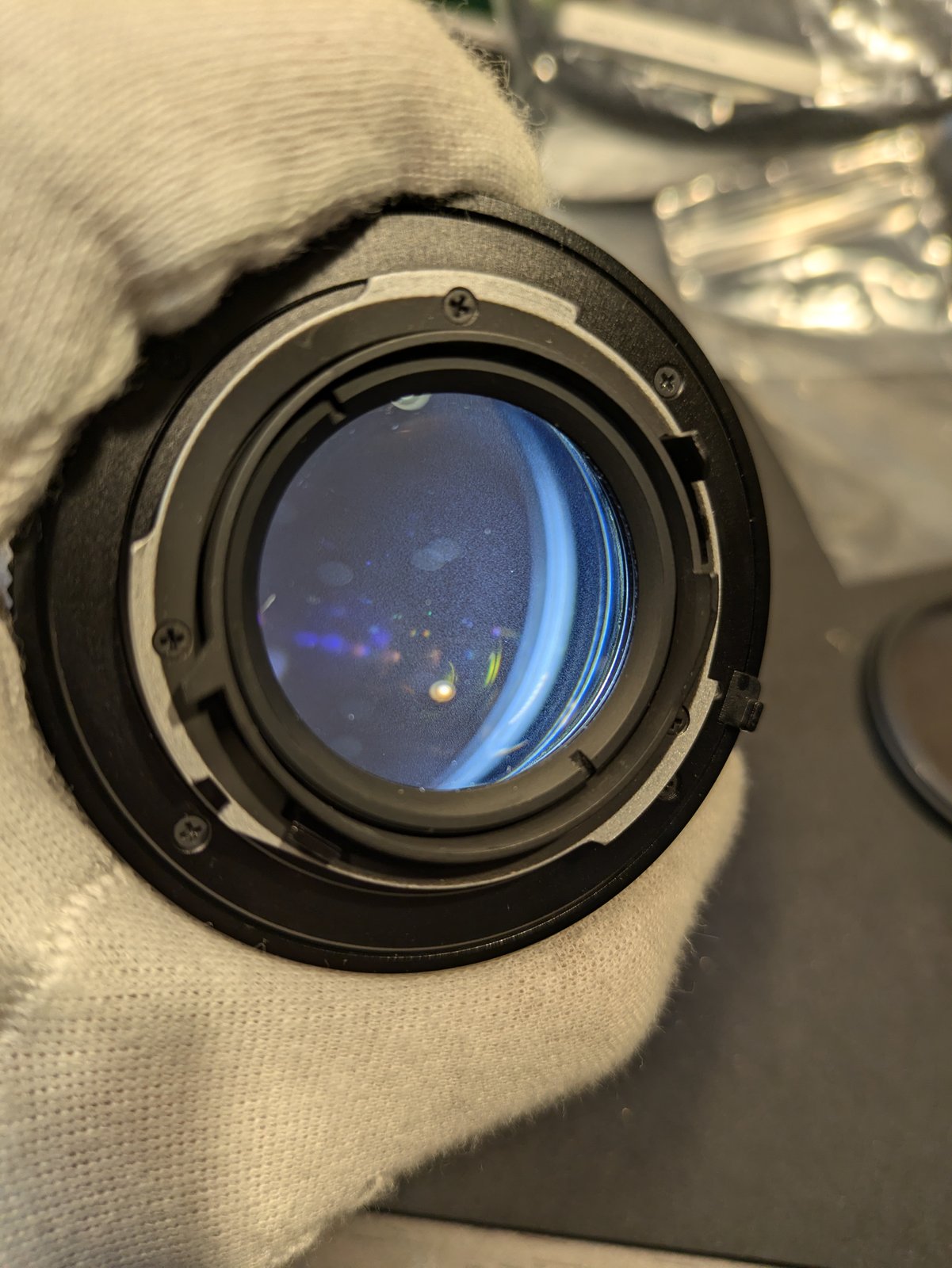
From the mount side, the rear lens group unscrews from the body as one unit.
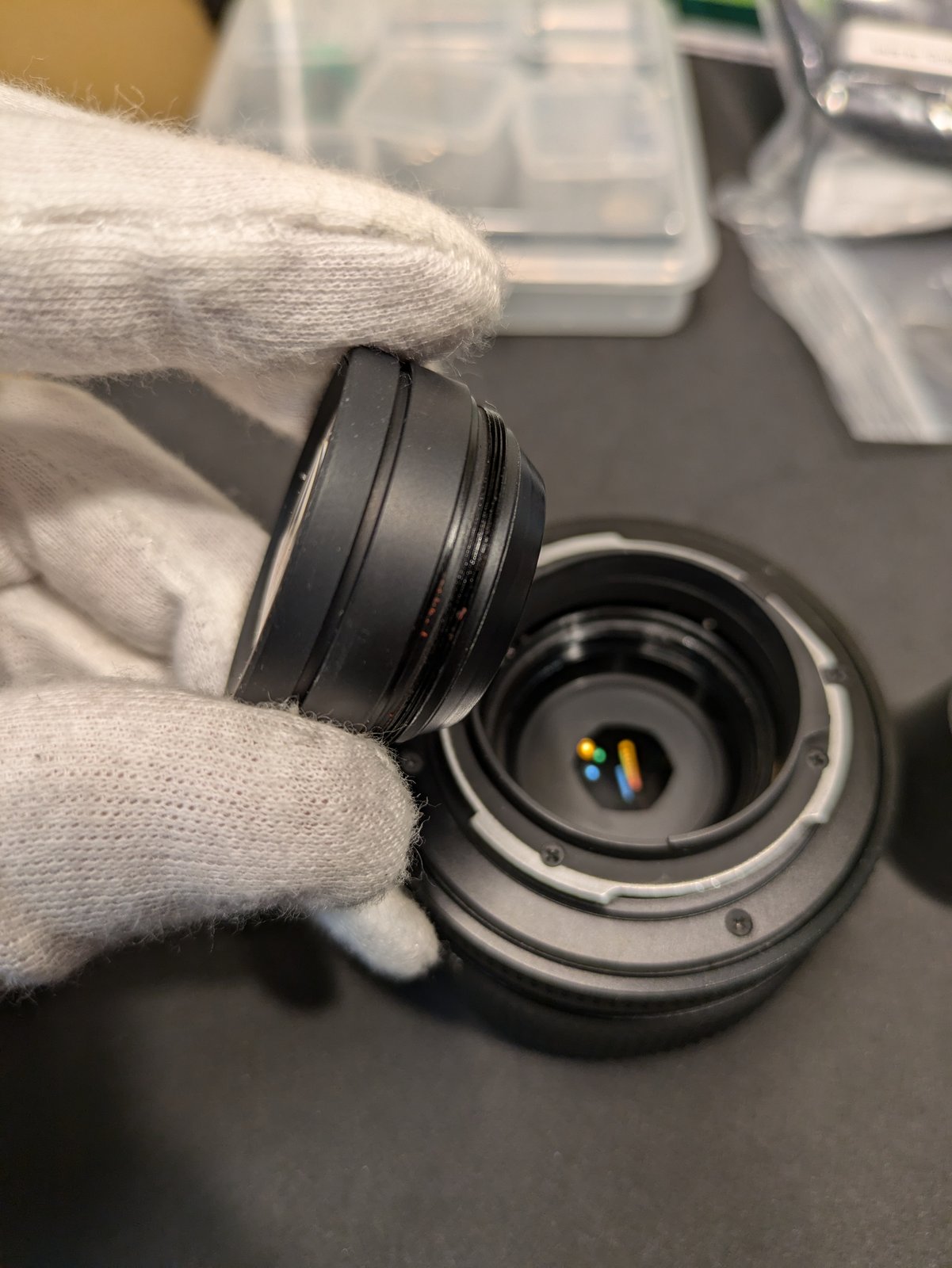
3. Opening the group
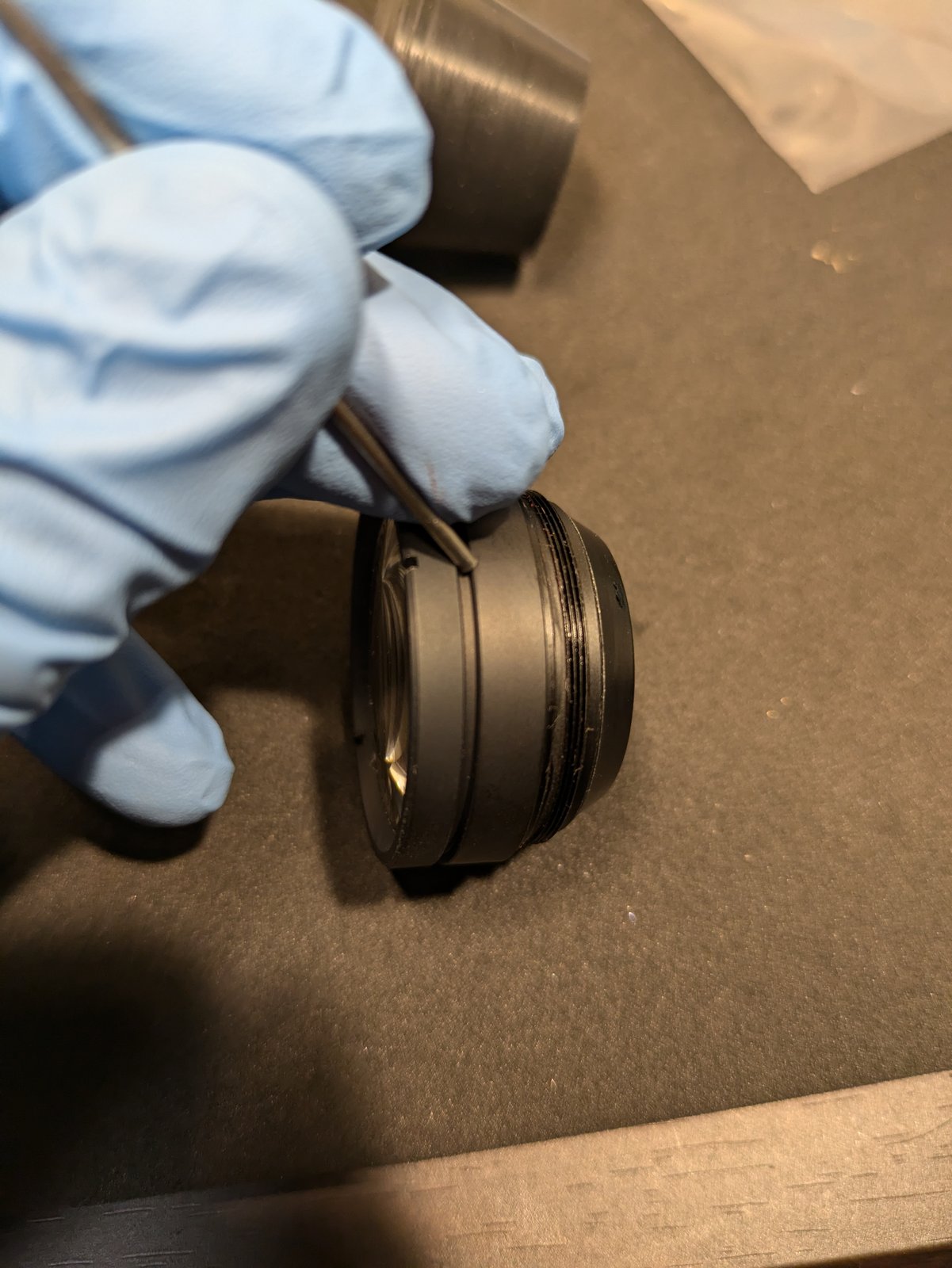
The group is held together by rings. I set the tip of a tool in the slot of the ring on the rim to turn it.
4. Inside the group
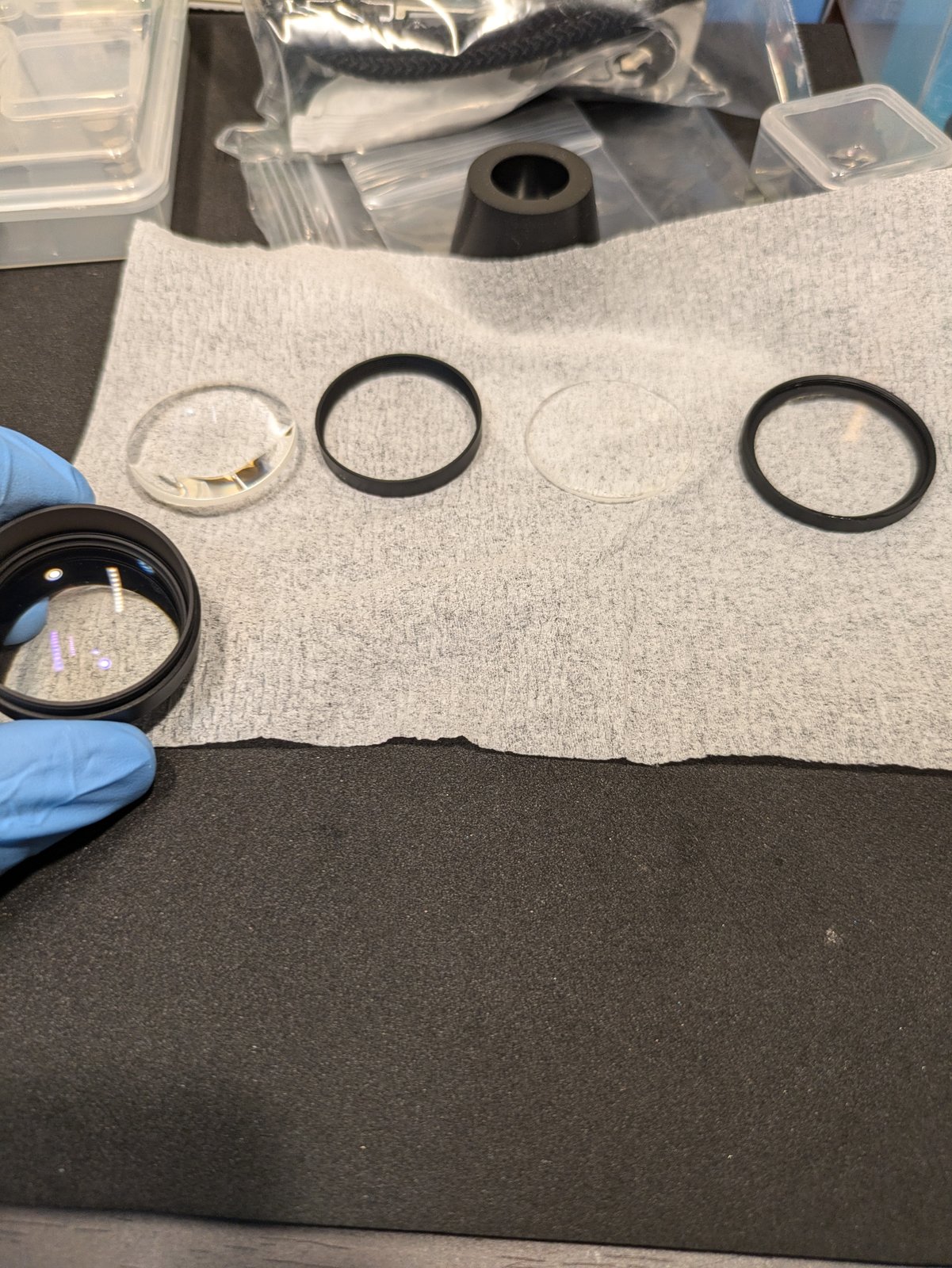
Here are the parts that came out, laid on a paper wipe: a thick curved element, a black ring, a thin flat element and a second black ring. The cell itself is in my hand on the left.
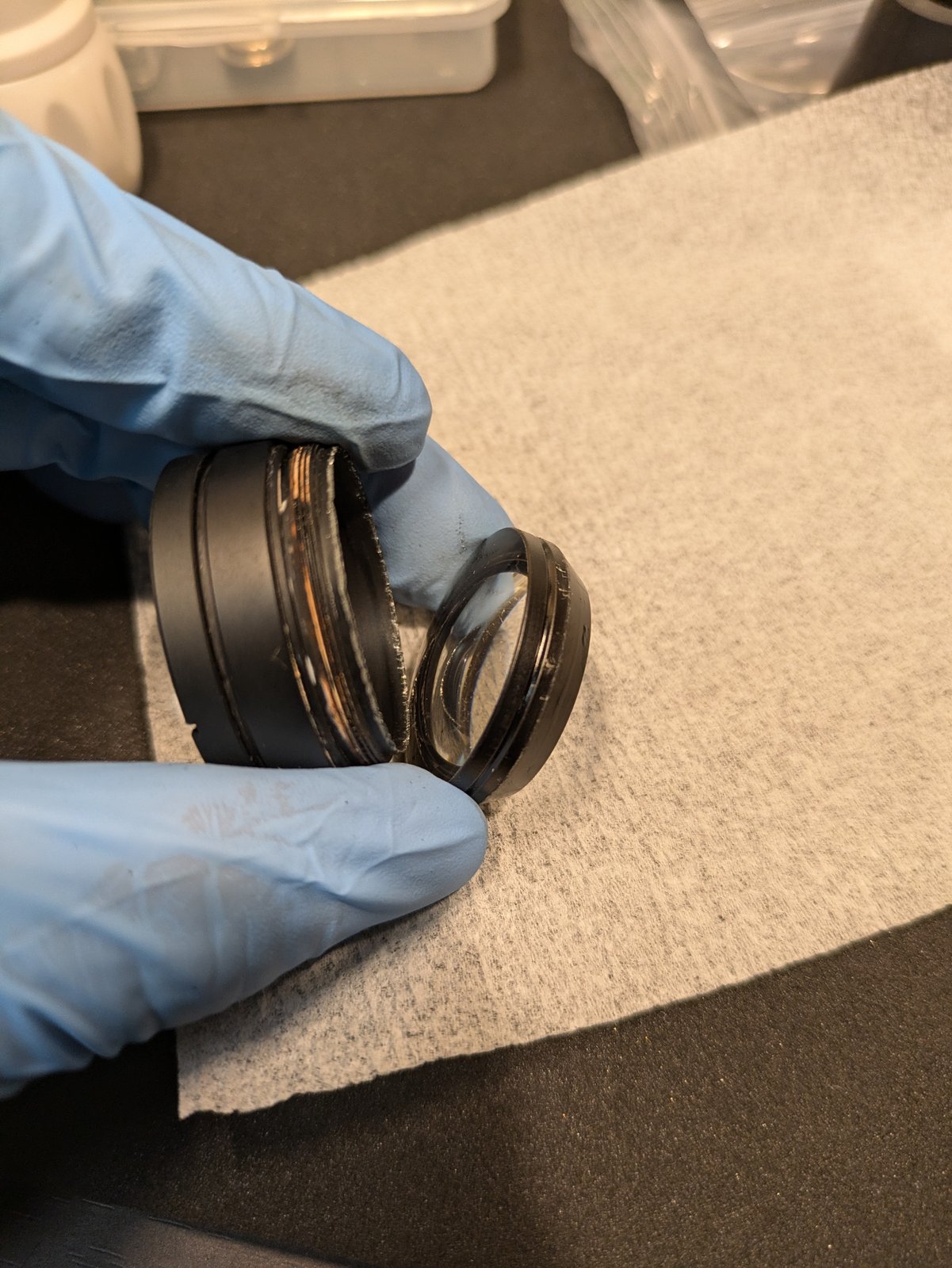
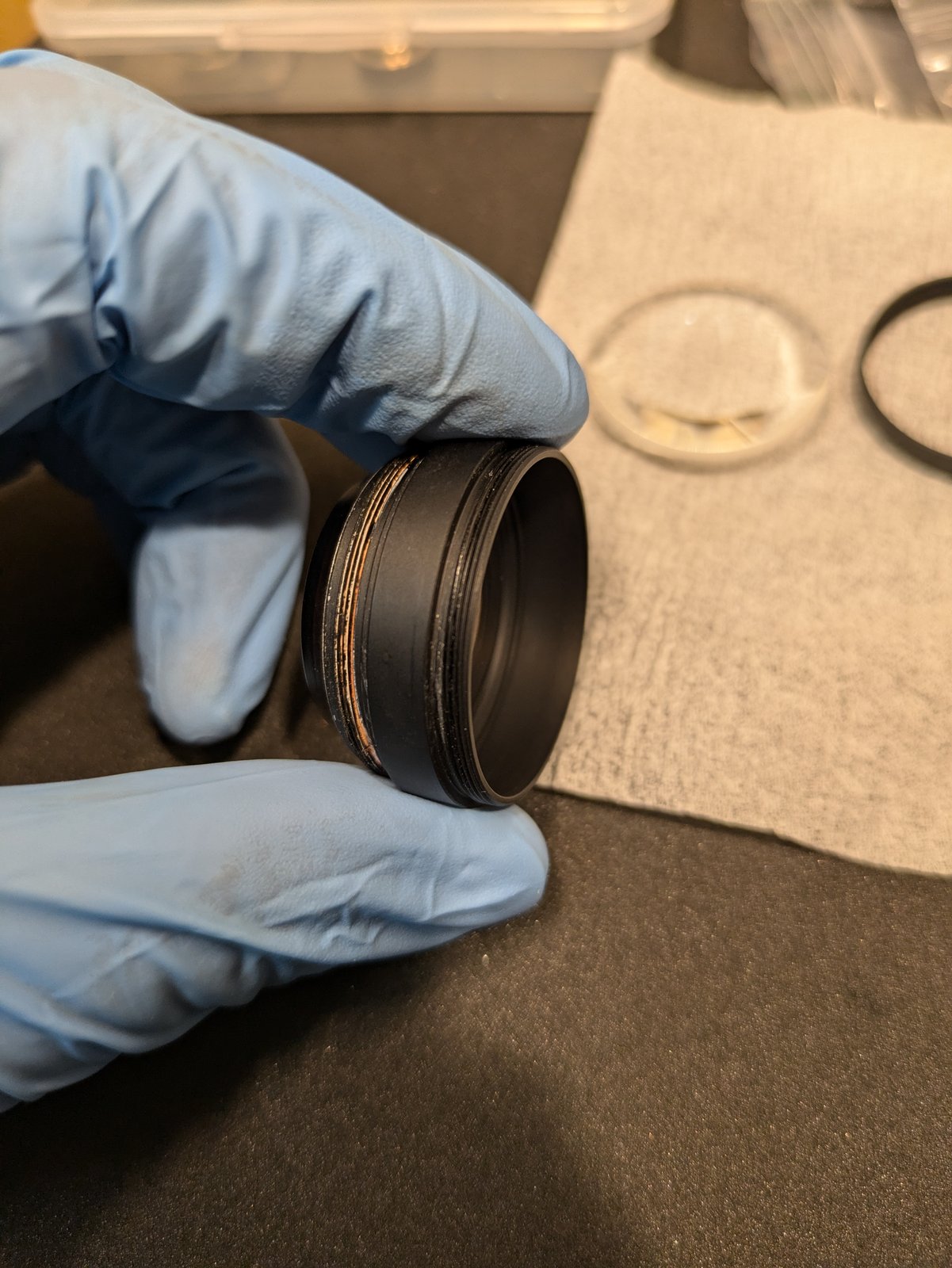
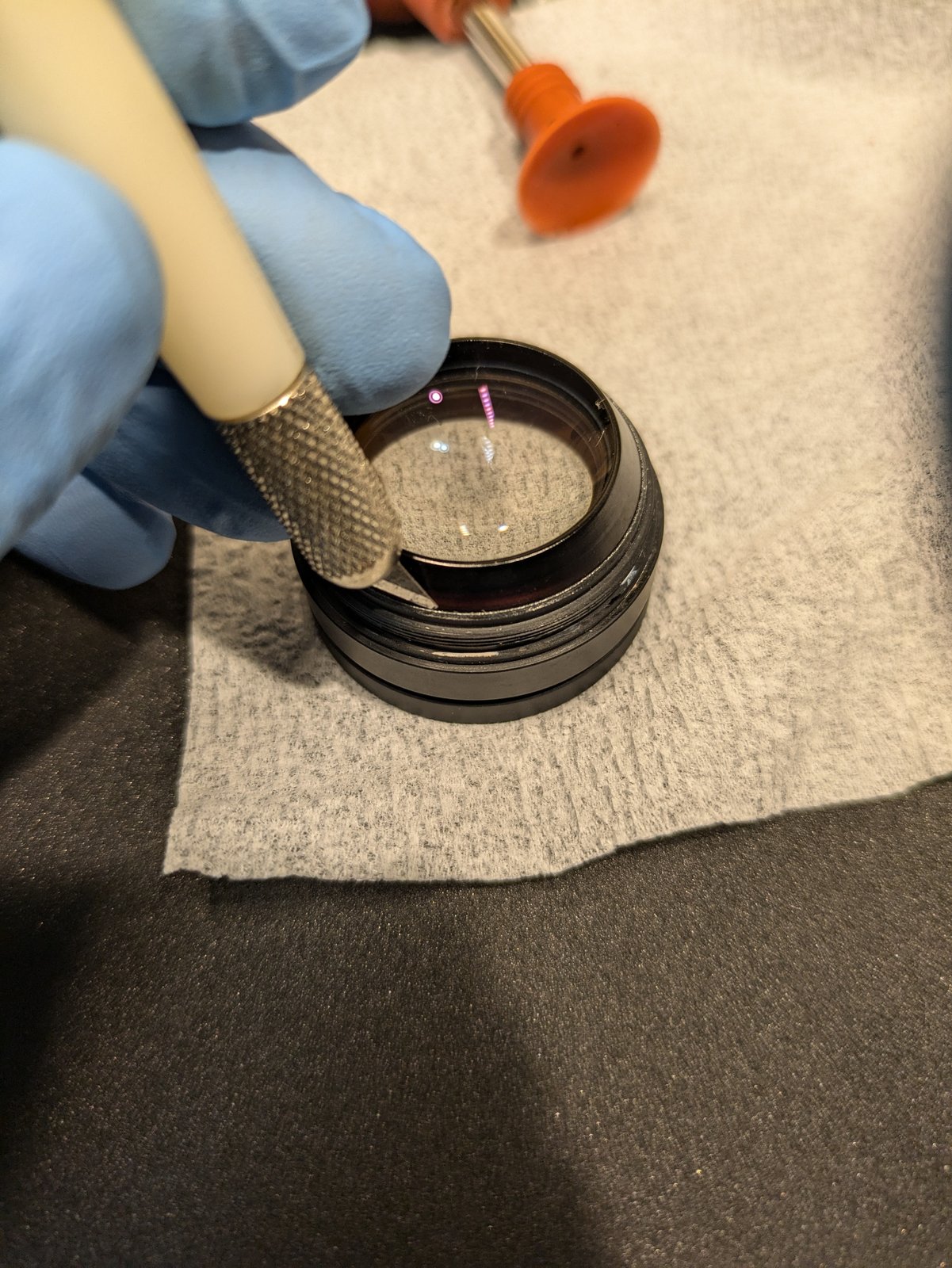
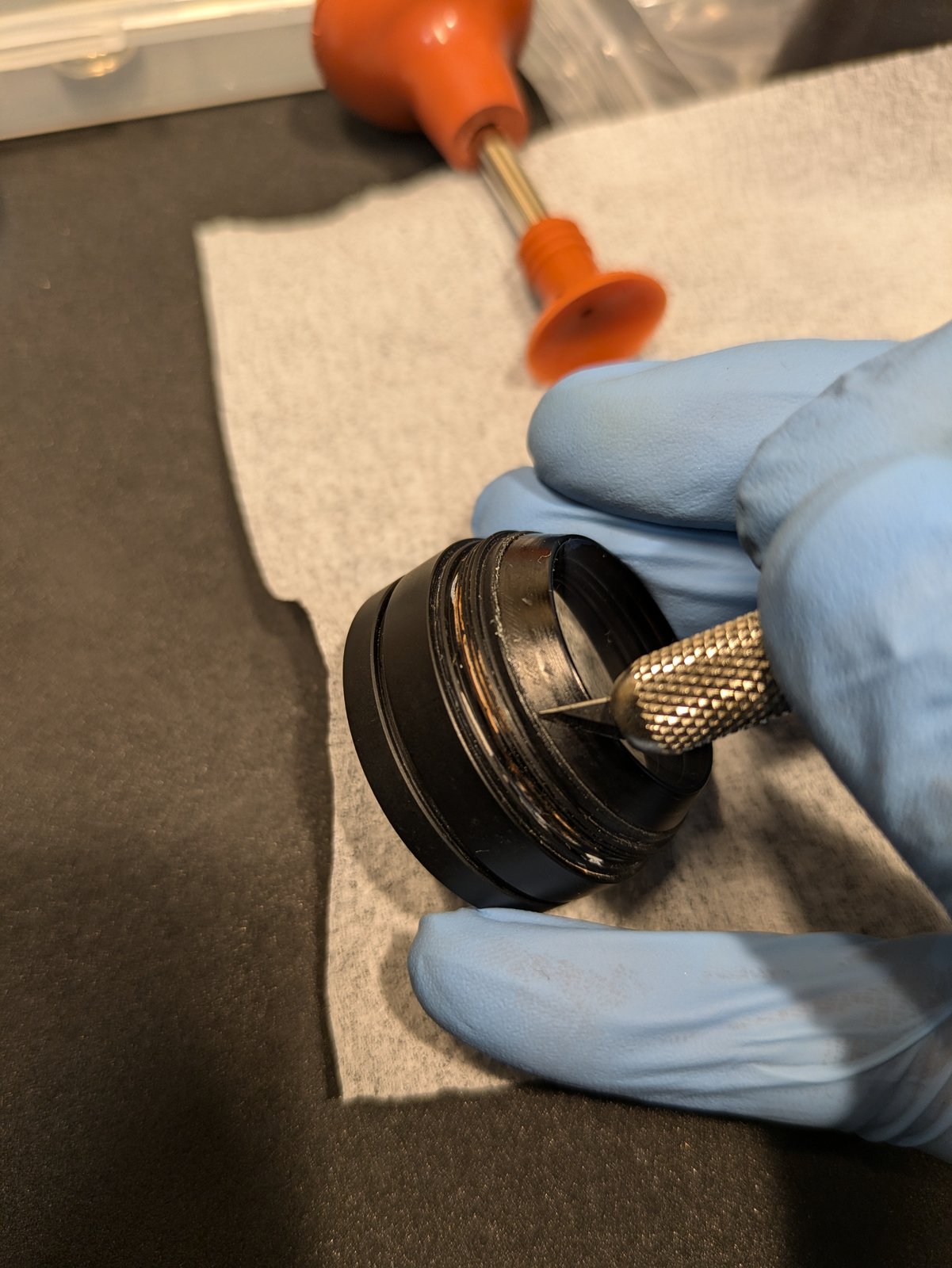
The element sits in its cell with the metal rim crimped over the edge of the glass to hold it in. To get it out, I lifted the crimped rim with a hobby knife, a little at a time, working all the way around.
The orange tool in the background is a lens sucker. Its suction cup grips the glass so the element can be lifted out.
5. The balsam separation
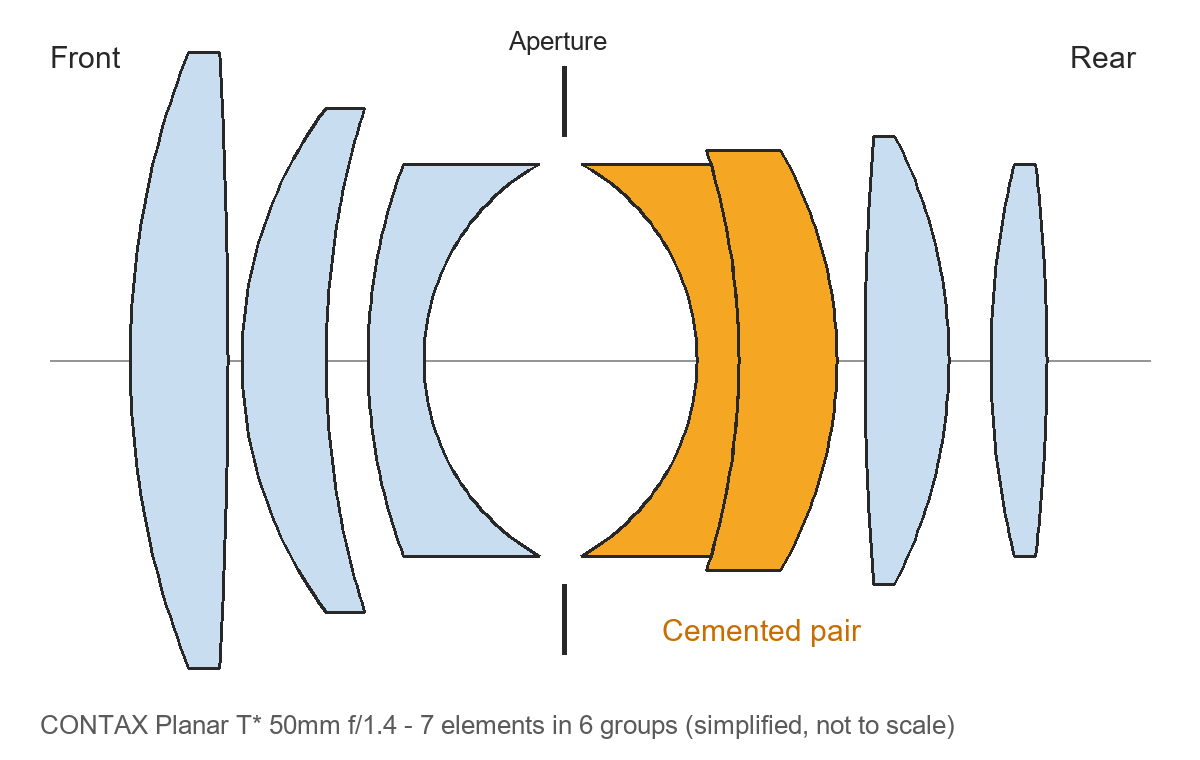
The Planar 50mm f/1.4 has 7 elements in 6 groups, and only one pair of them is cemented together: the two elements just behind the aperture, in the rear group. That pair is where balsam separation can happen in this lens.
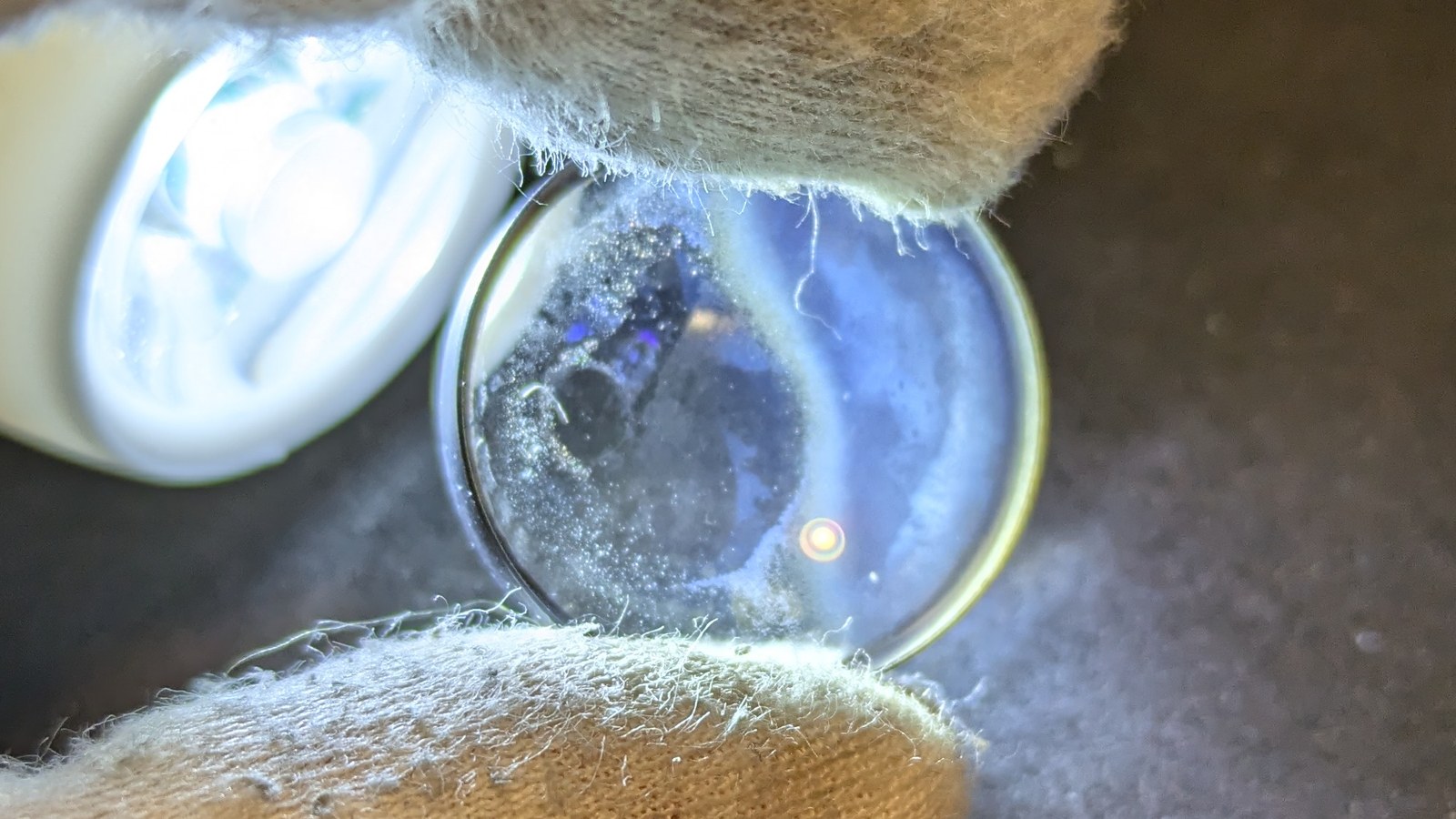
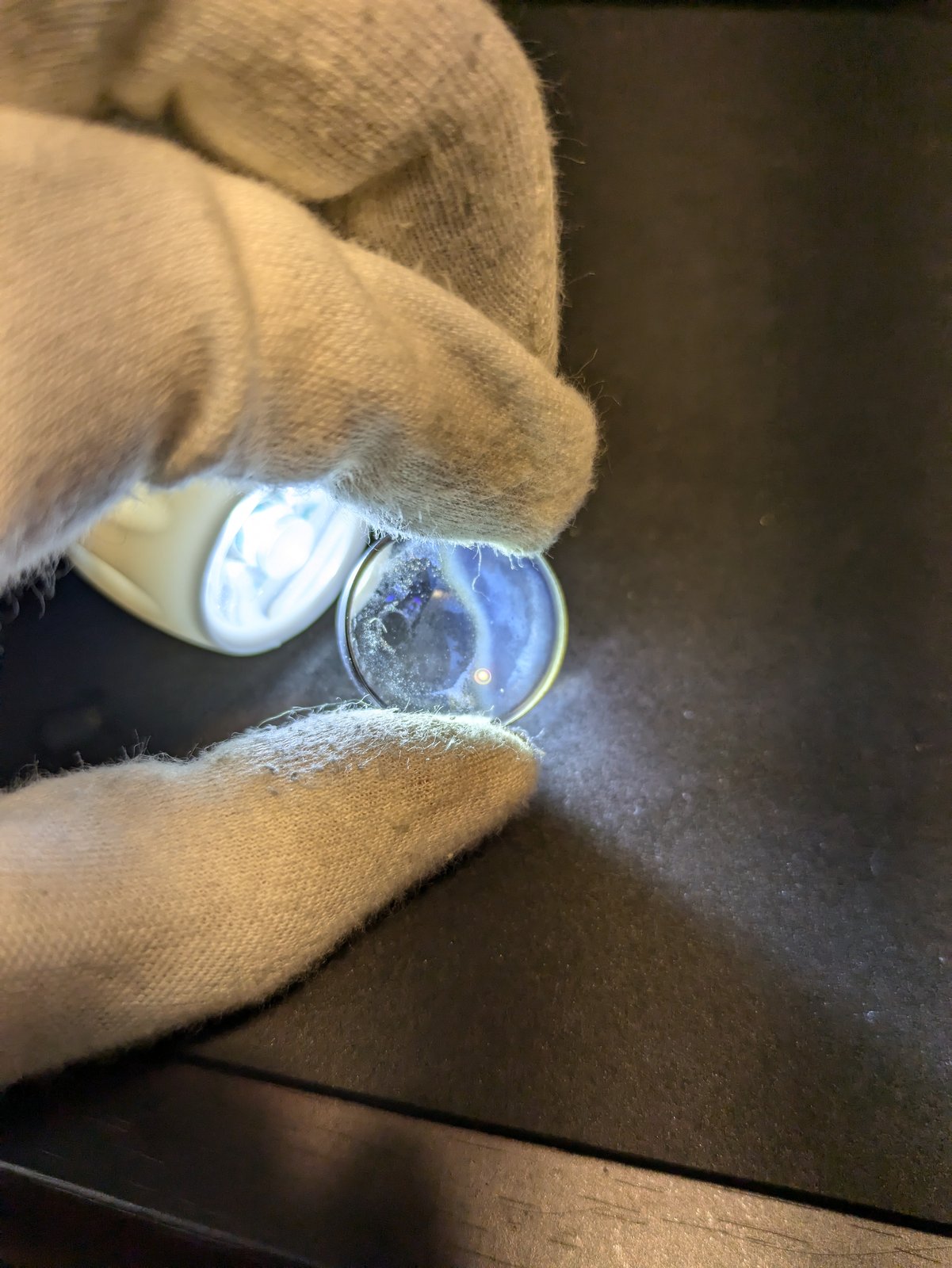
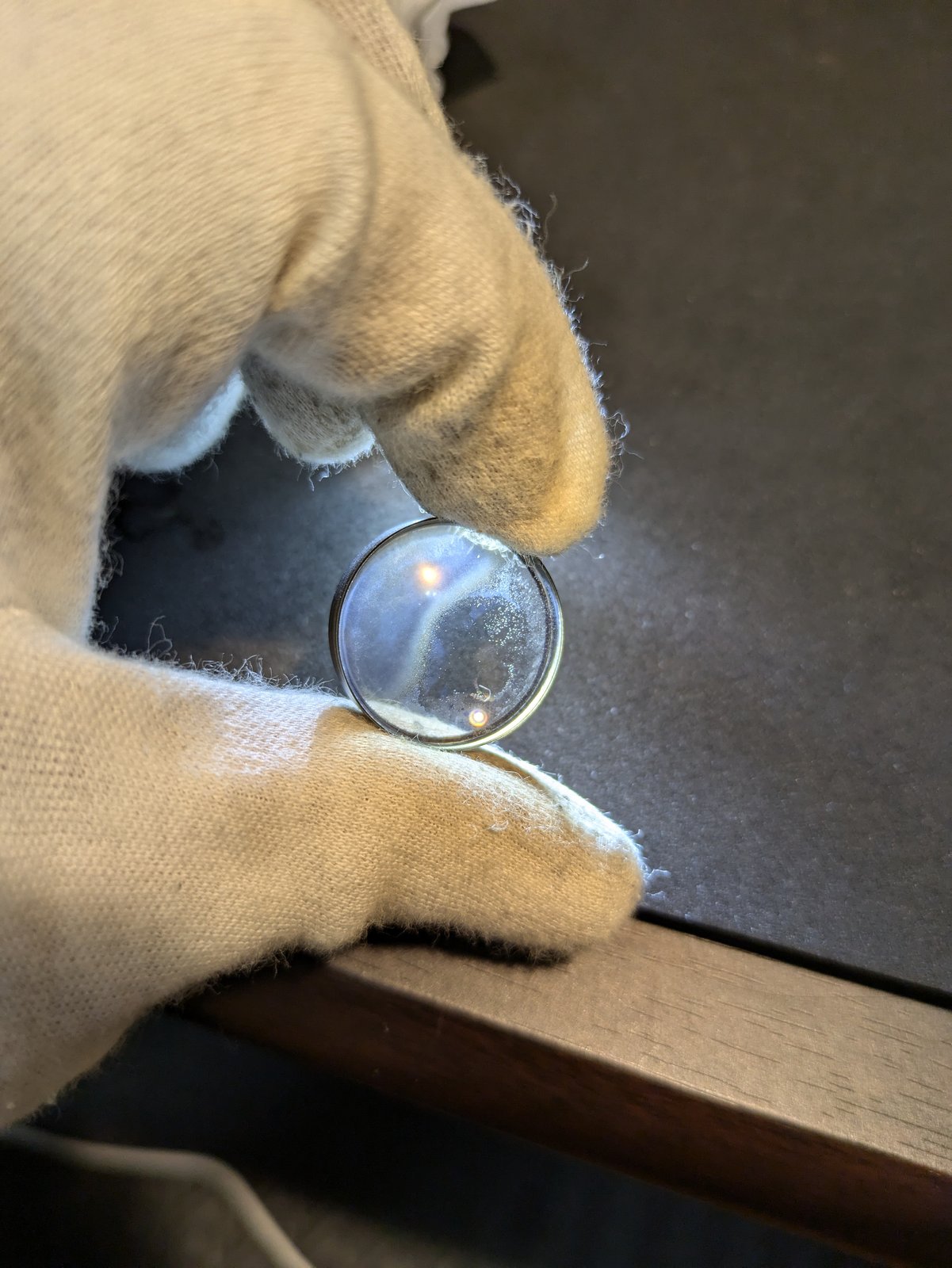
Held up to a light, the cemented element shows the problem clearly: a frosty, fern-like pattern spreading across the glass, with clear areas in between.
6. Separating and re-cementing
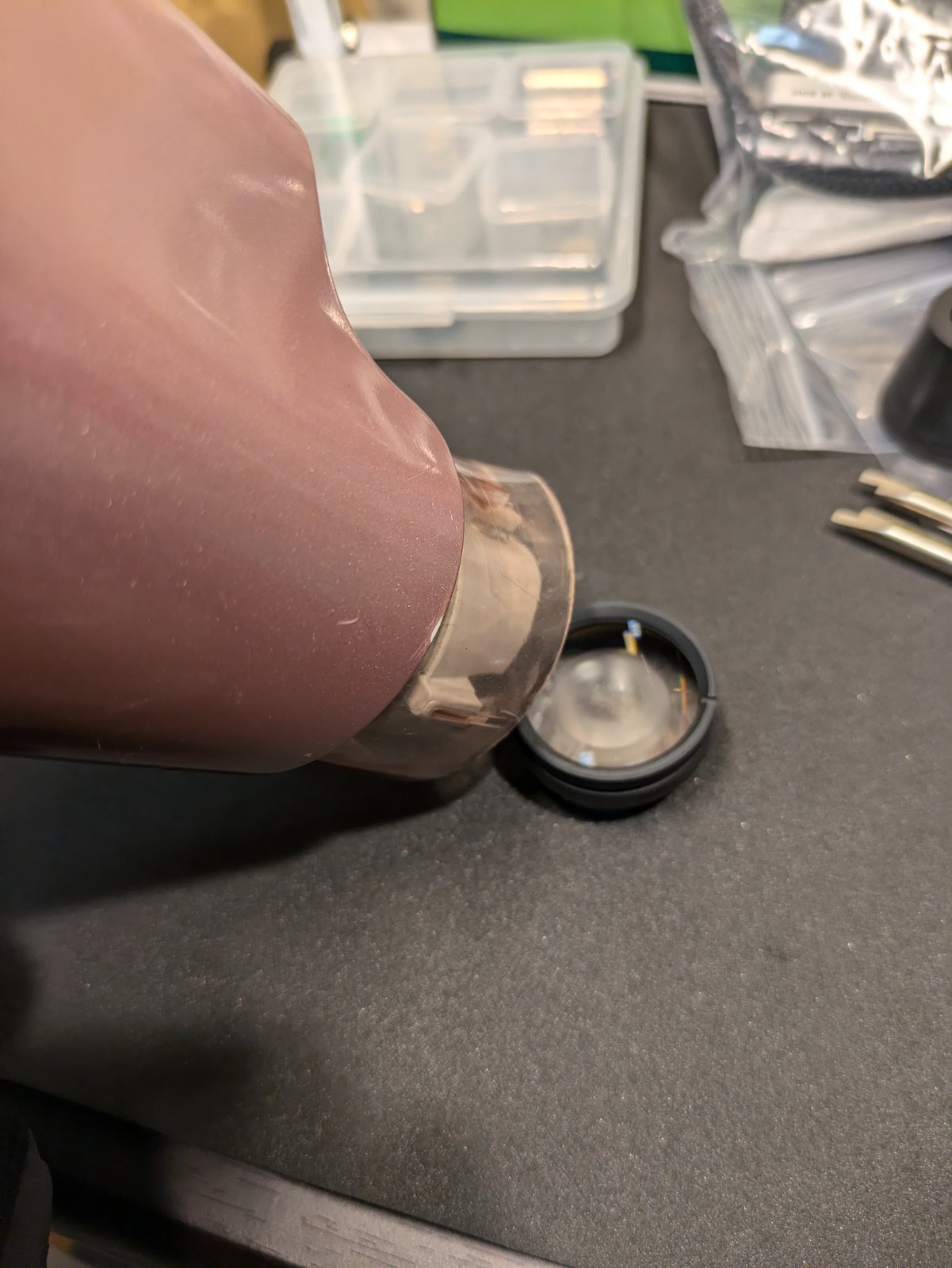
To separate the two pieces of glass, I warmed the pair with a hair dryer. The heat softens the old balsam, and the two glasses came apart.
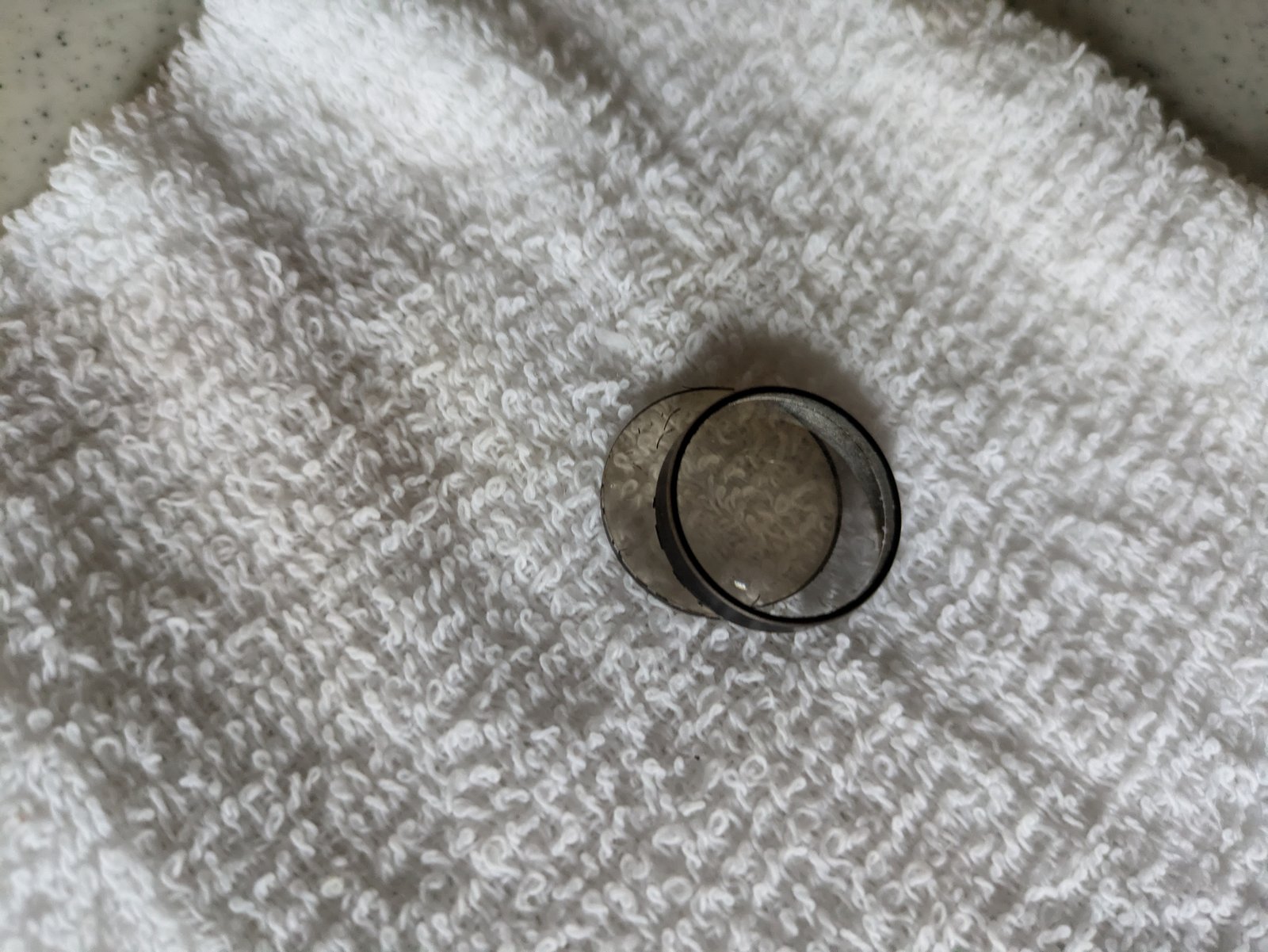
Some of the old balsam stays on the glass after the pieces come apart. To take it off, I used a cream cleanser called Jif. I was taught that it has to be Jif: other cleansers are harder than the coating on the lens surface and can scratch it, but Jif is softer than the coating, so it does not leave scratches.
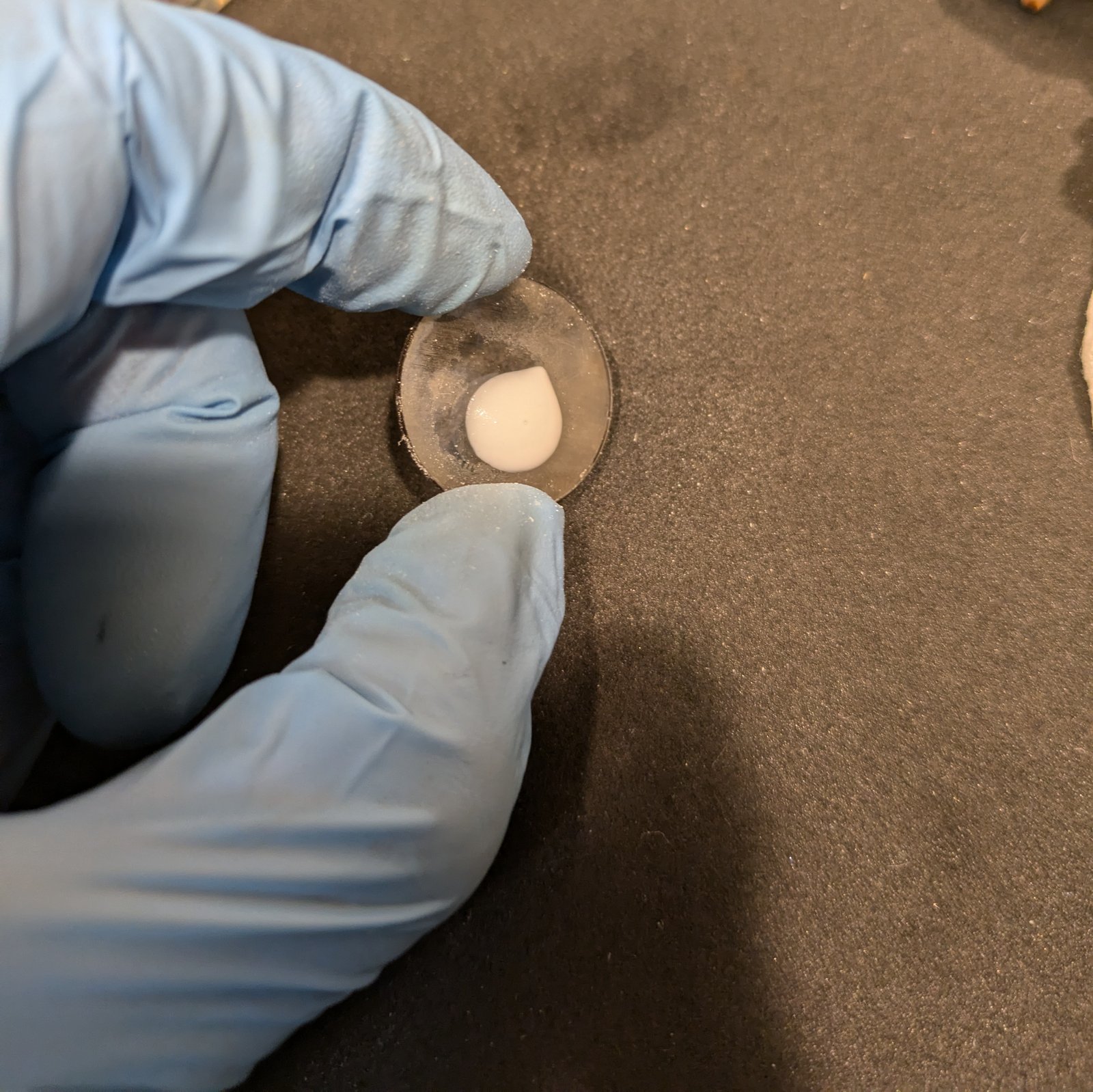
For the new cement I used xylol balsam, the same balsam I always use for this repair.
7. Checking under the light
Each element was checked again by holding it close to a light.
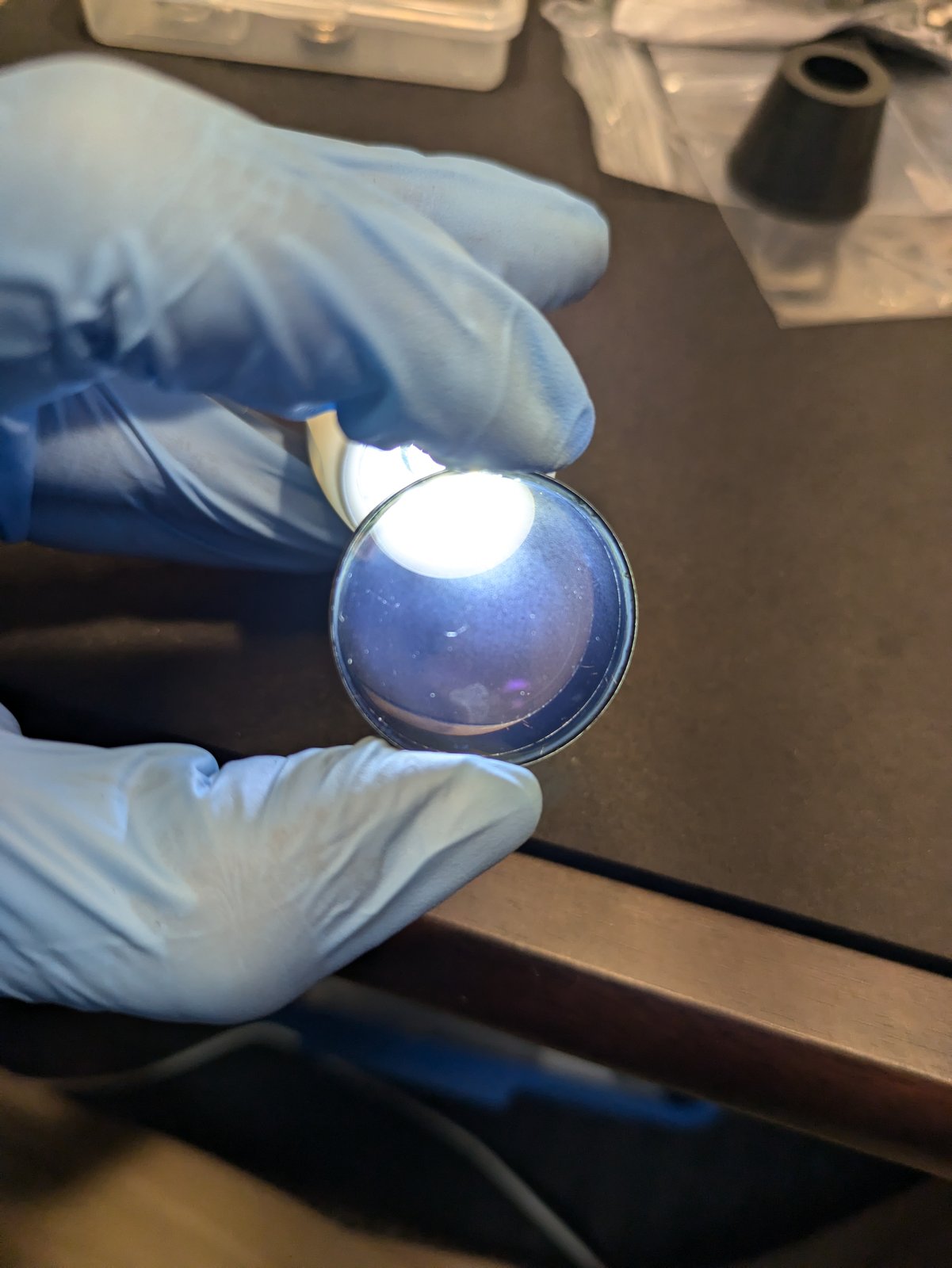
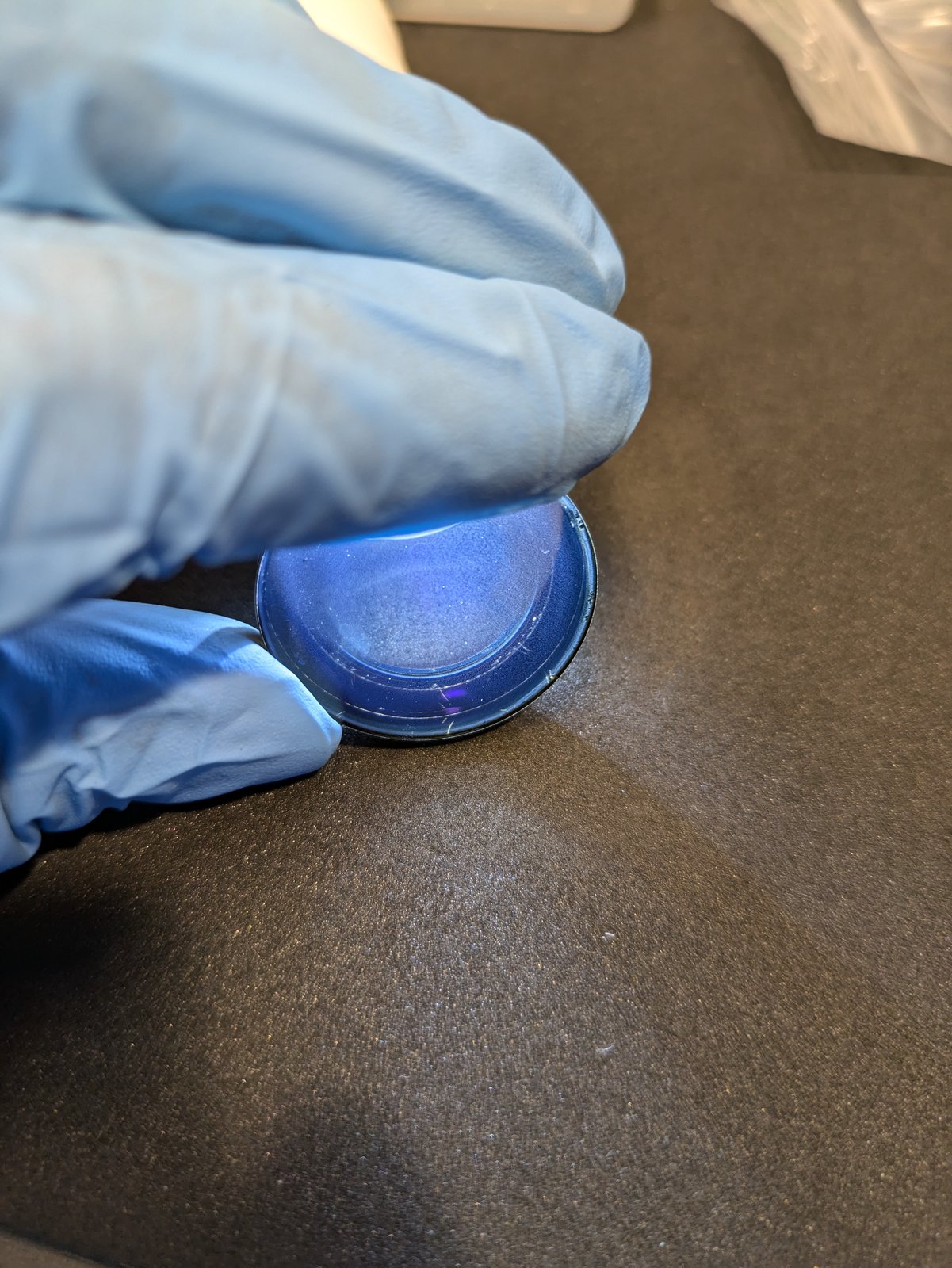
The haze was completely gone, and the glass was clear again. Then the lens went back together.
8. After
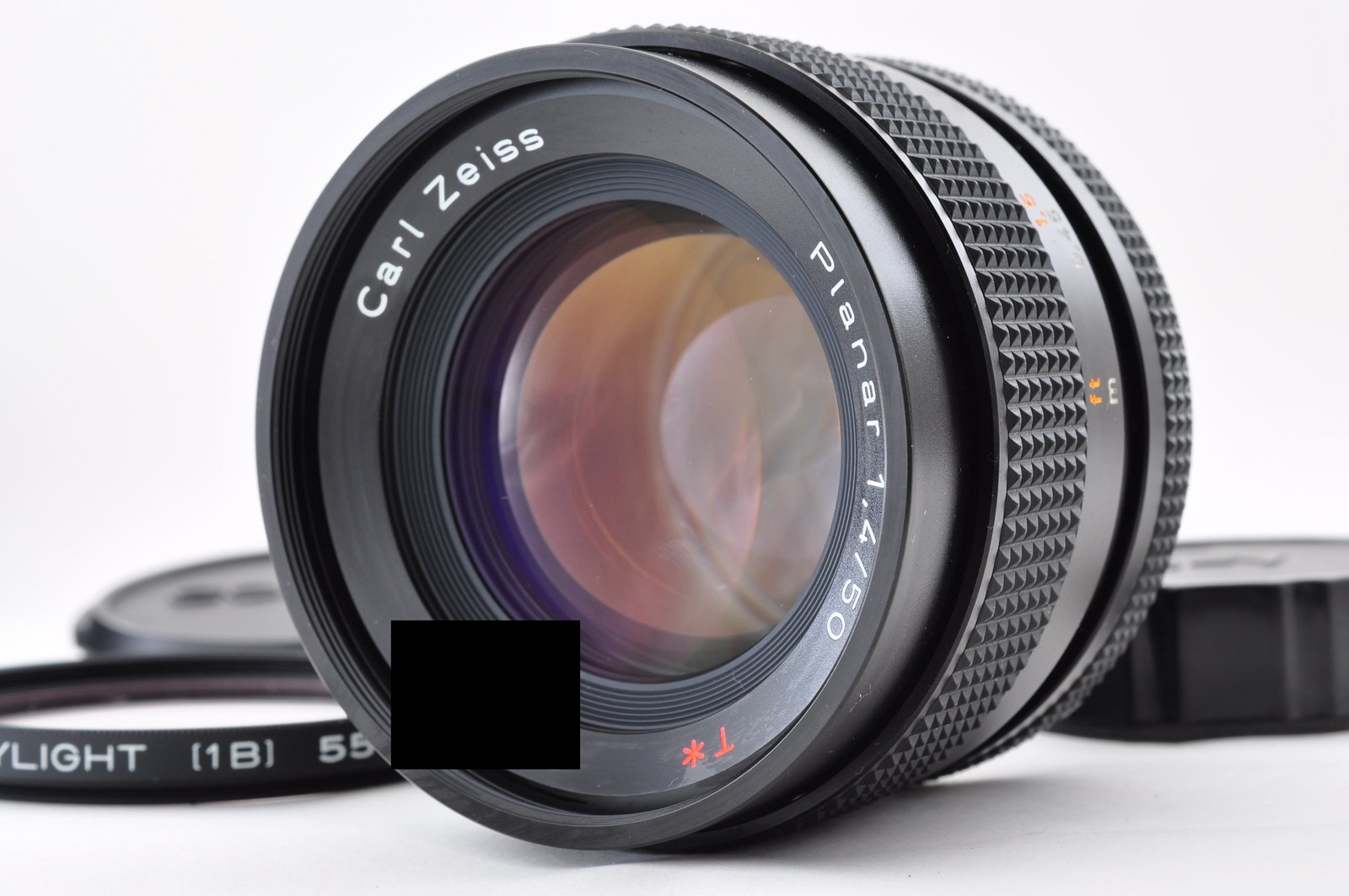
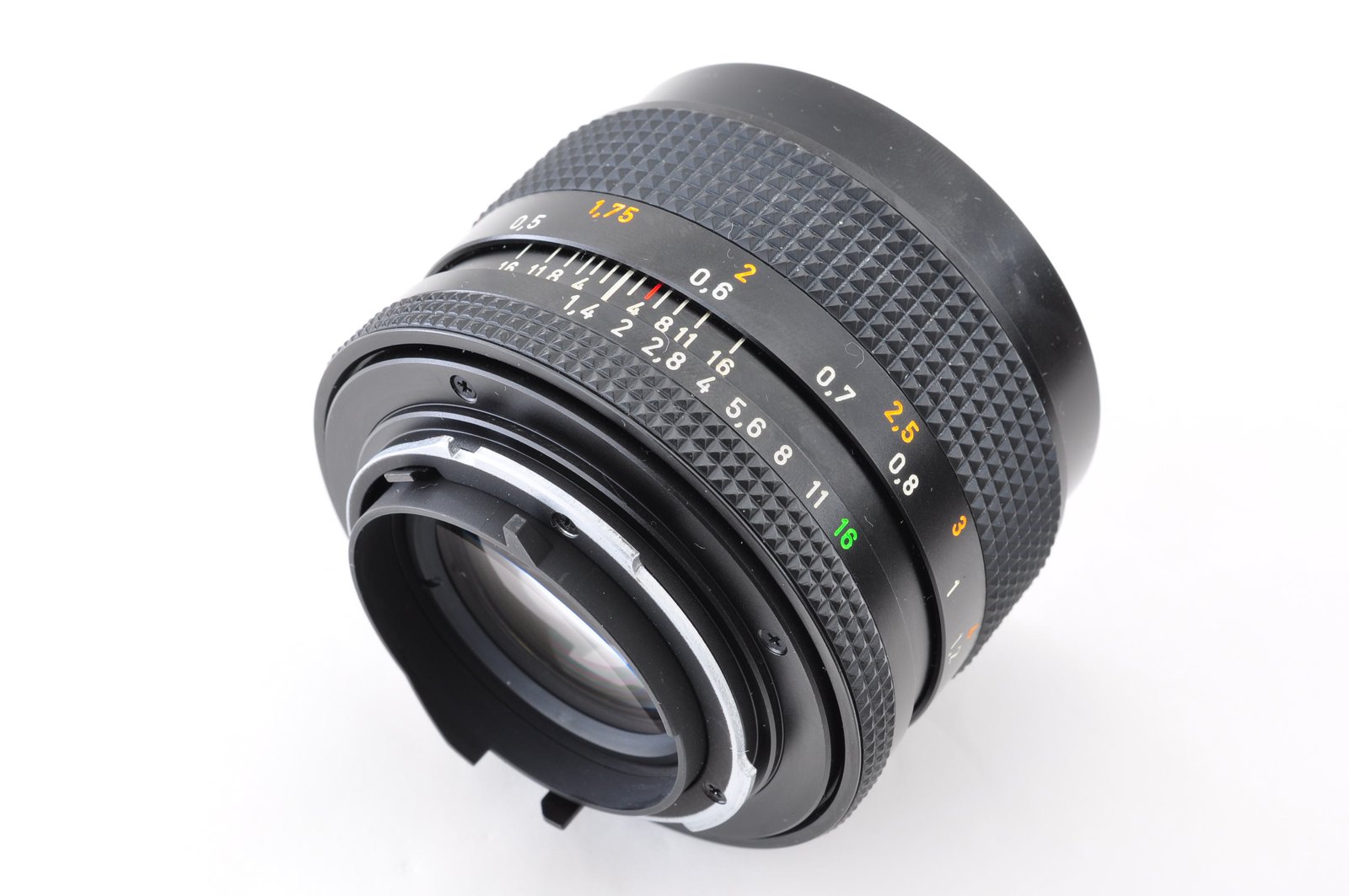
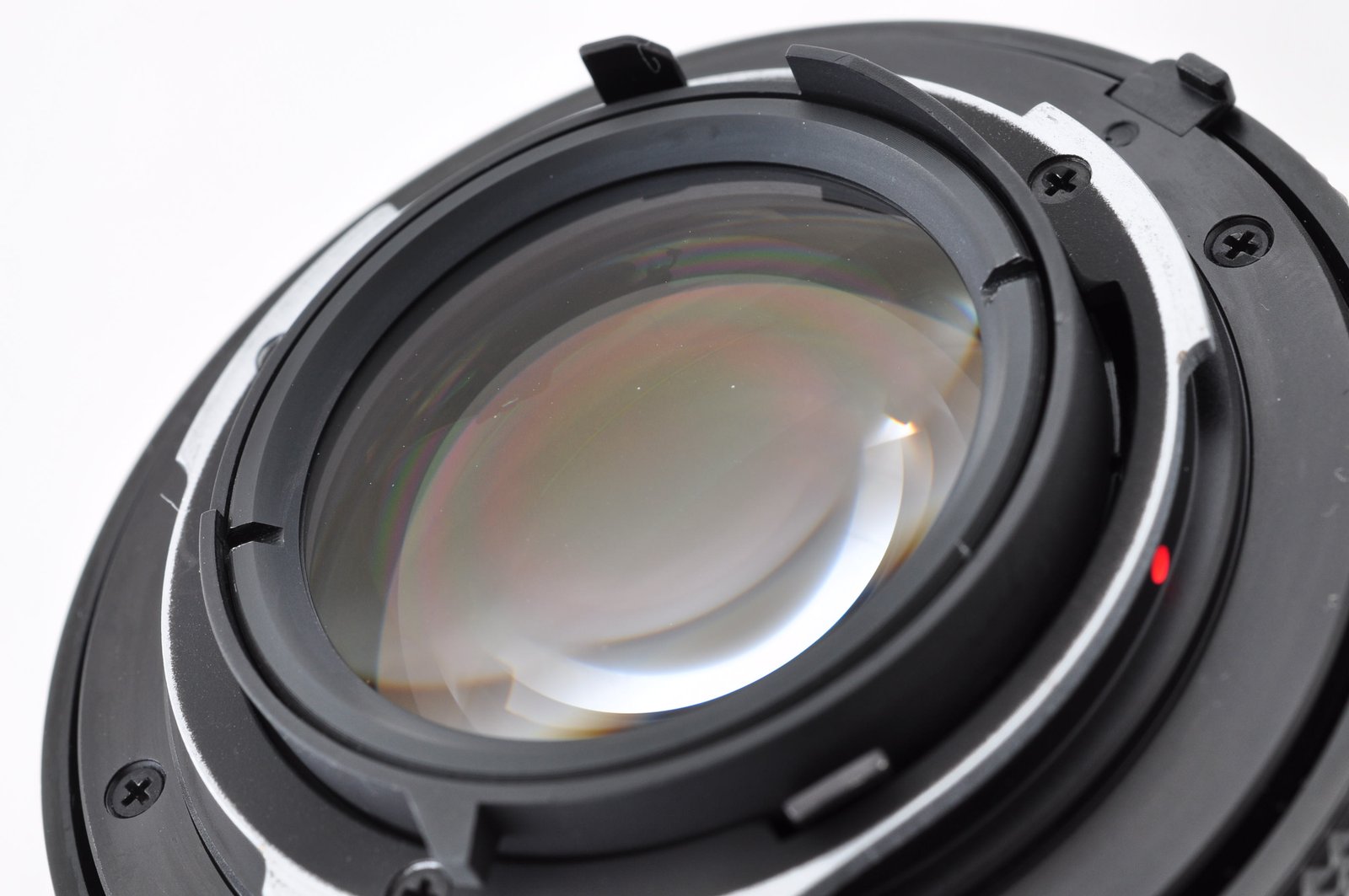
About six months after the repair, the lens found a new owner through our eBay shop as a Mint lens. The buyer left positive feedback, which I was very glad to see.
Balsam separation looks serious, but it can often be repaired by taking the pair apart and cementing it again.
Thank you very much for reading.
Follow azuleterno on Instagram
I run azuleterno, a shop in Japan that sends good-quality used Japanese cameras and lenses to people all over the world. Like the lens in this post, items with minor problems are repaired and put in order before they are sold.
On Instagram I post the lenses and cameras I have just listed. Follow along to see what comes in next.
Questions, or looking for a particular lens or camera? Send me a DM on Instagram. Requests are welcome.
Shop worldwide on eBay
We sell good-quality items from Japan to buyers all around the world, and eBay is where we do it. Our items are listed in our eBay shop with detailed photos and an honest description of their condition, and we ship from Japan to your door.
When you find something you like on Instagram, this is the place to see it in full and buy it.
“For Your Happier Life, For the Future of Our Earth.” Giving well-made cameras a longer life is our small way of caring for the planet.
日本語
コンタックス カールツァイス プラナー T* 50mm F1.4 は、コンタックス/ヤシカ(C/Y)マウントの明るい標準レンズです。この個体の鏡胴には「Lens made in Japan」と書かれています。バルサム切れがあったので、2024年11月に作業しました。分解と修理の流れを順に紹介します。
レンズの中には、2枚のガラスを透明な光学用の接着剤(バルサム)で貼り合わせたものがあります。年月がたつとこの接着が剥がれてきて、ガラスの中に曇りやザラッとした模様が見えることがあります。原因は2枚のガラスの間にあるので、表面を拭いても直りません。
1. レンズを覗く
光にかざすと、前からもマウント側からも、レンズの中に細かい点々の曇りが見えます。
2. 後ろの群を外す
マウント側から、後ろのレンズ群がひとまとまりでねじって外れます。
3. 群を開ける
群はリングで留まっています。縁のリングの溝に道具の先を当てて回しました。
4. 群の中
取り出した部品をペーパーの上に並べました。厚みのある曲面のレンズ、黒いリング、薄く平らなレンズ、もう1本の黒いリングです。左手に持っているのが枠です。内側の枠が外側の枠から出てくるところと、空になった枠(ネジ山に茶色っぽい残りかすが付いています)も撮っています。
この玉は、金属の枠の縁を内側に折り曲げて(かしめて)ガラスを押さえてあります。玉を取り出すため、デザインナイフで、かしめた縁を少しずつ、ぐるりと起こしました。
奥に写っているオレンジ色の道具はレンズサッカーです。吸盤をガラスに吸い付かせて、レンズを取り出すための道具です。
5. バルサム切れ
プラナー 50mm F1.4 は6群7枚で、貼り合わせてあるのは1か所だけです。絞りのすぐ後ろ、後ろの群にある2枚です。このレンズでバルサム切れが起きるのは、この2枚の間です。
貼り合わせのレンズを光にかざすと、ガラスの中にシダの葉のような、ザラッとした白い模様が広がっているのが分かります。
6. 剥がして貼り直す
2枚のガラスを剥がすため、ドライヤーで温めました。熱で古いバルサムがゆるみ、2枚が外れました。
剥がした後のガラスには、古いバルサムが残ります。これを落とすのに、ジフというクリームクレンザーを使いました。ジフでないといけないと教わっています。ほかのクレンザーはレンズ表面のコーティングより硬く、傷を付けてしまいますが、ジフはコーティングより柔らかいので傷にならないそうです。
貼り直しには、いつも使っているキシロールバルサムを使いました。
7. 光で確認
それぞれのレンズを、もう一度ライトに近づけて確認しました。
曇りは完全に取れて、クリアになりました。そのあと、レンズを組み立てました。
8. 仕上がり
修理からおよそ半年後、このレンズは Mint(とてもきれいな状態)として新しい持ち主のもとへ渡りました。良い評価もいただけて、とてもうれしかったです。
バルサム切れは見た目が深刻ですが、貼り合わせを剥がして貼り直すことで直せることが多いです。
最後まで読んでいただき、ありがとうございました。
オールドレンズの分解清掃を承ります|Repair Factory Fuji Base
この記事のような分解清掃を、国内のお客さまのレンズでもお受けしています。静岡県富士市の工房で、カビ・くもり・絞りの油染み・バルサム切れの清掃を、1本ずつ作業します。
基本料金2,000円(税込価格2,200円)・返送料込み。料金表とお申し込みは、受付ページをご覧ください。
作業の様子は、Instagram @fujibase_repair でも紹介しています。
InstagramでazuleternoをFollowしてください
日本の良質な中古カメラ・レンズを、世界中の方へお届けしているショップ azuleterno を運営しています。今回のレンズのように、小さな不具合のある品は修理・整備してから販売しています。
Instagramでは、新しく出品したレンズやカメラを紹介しています。フォローしていただくと、次に入ってくる品が見られます。
ご質問や、お探しのレンズ・カメラがあれば、InstagramのDMでお気軽にどうぞ。
モットーは “For Your Happier Life, For the Future of Our Earth.”(あなたのより幸せな暮らしと、地球の未来のために)。良いカメラを長く使い続けてもらうことが、地球を大切にする私たちなりの方法です。
Comments